Quantum Computing: Preparing for the Post-Classical Economy
As quantum moves from lab to leverage, the leaders who grasp its timelines - and its risks to today's cryptography - will shape the next decade of advantage.
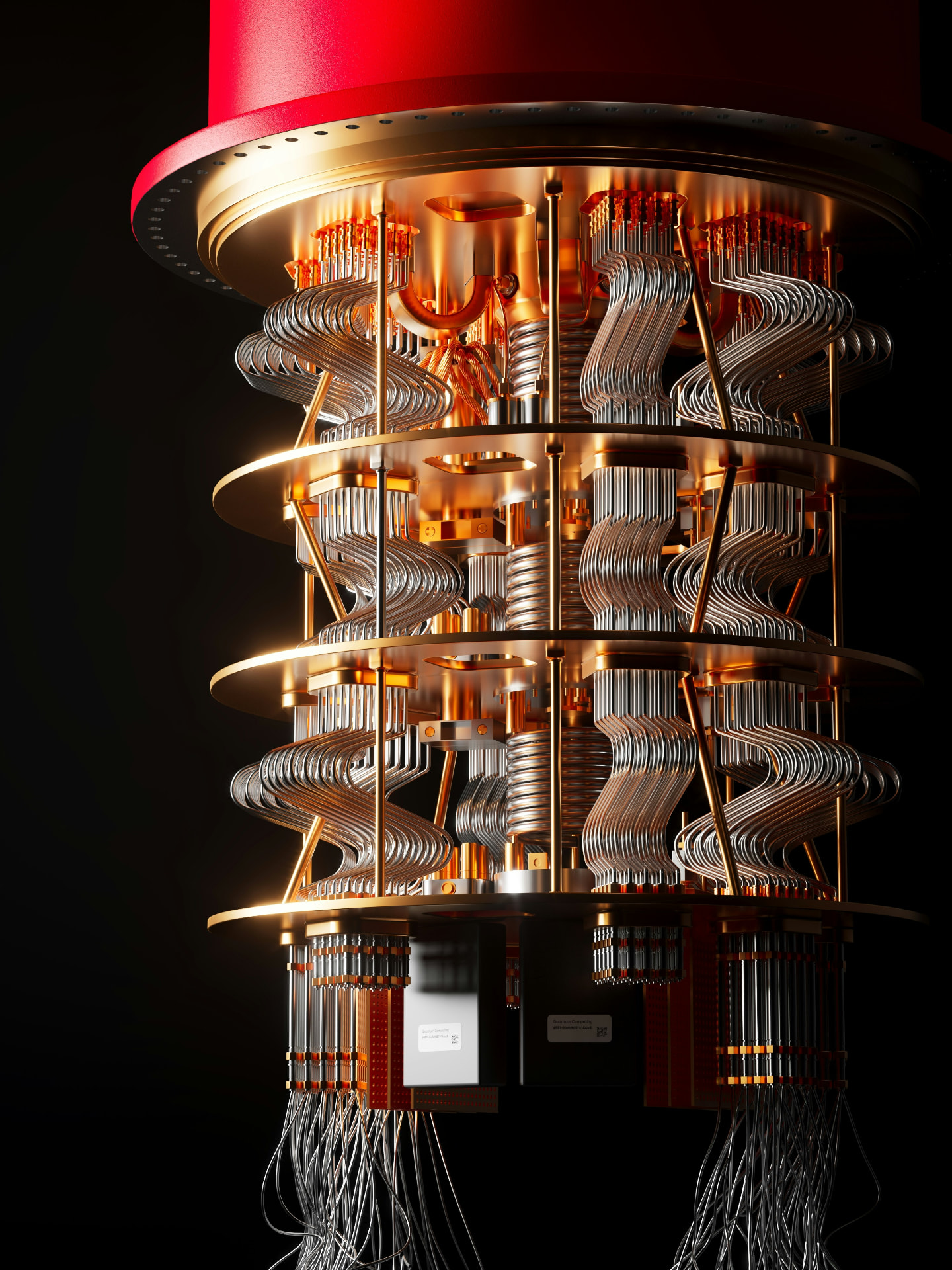
For decades, quantum computing lived comfortably in the future tense. That is no longer where it belongs. In December 2024, Google's Quantum AI team unveiled Willow, a processor that crossed a threshold researchers had chased for nearly thirty years: as the team added qubits, the error rate fell rather than rose. This “below-threshold” error correction is the hinge on which practical quantum computing turns, because it means a machine can, in principle, be scaled up without drowning in its own noise. To dramatise the leap, Google ran a benchmark that Willow completed in under five minutes and that would take a leading supercomputer longer than the age of the universe. The result, published in Nature, was less a product than a proof that the engineering path is open.
The industry has moved quickly to lay that path out. In June 2025, IBM published a roadmap to Starling, which it describes as the world's first large-scale, fault-tolerant quantum computer, targeted for 2029 and to be housed in a new data centre in Poughkeepsie, New York. Months earlier, Microsoft had unveiled Majorana 1, a chip built on topological qubits it argues will prove more stable at scale. McKinsey's 2026 Quantum Technology Monitor calls this moment a “commercial tipping point,” and Boston Consulting Group estimates quantum could generate up to $850 billion in economic value by 2040. The precise dates remain contested, and healthy scepticism is warranted — but the direction of travel is not.
For business leaders, the temptation is to file all of this under “interesting, not yet urgent.” That would be a mistake, for one specific reason: cryptography. The encryption that protects banking systems, payment rails, wallets, health records and state secrets — RSA and elliptic-curve cryptography — rests on mathematical problems that classical computers cannot solve in useful time but a sufficiently powerful quantum computer, running Shor's algorithm, could. The threat does not wait for that computer to exist. Adversaries can practise “harvest now, decrypt later”: intercepting and storing encrypted data today in the expectation of decrypting it once the hardware arrives. Any information that must stay confidential into the 2030s is, in effect, already exposed. Citi's Institute captured the stakes in a January 2026 report titled “The Trillion-Dollar Security Race,” and the U.S. Federal Reserve has published research examining the same risk for distributed-ledger and financial networks.
The defence exists, which is the reassuring part. In August 2024, the U.S. National Institute of Standards and Technology finalised its first post-quantum cryptography standards — FIPS 203, 204 and 205 — algorithms designed to withstand both classical and quantum attack. NIST has since signalled that legacy algorithms such as RSA and ECC should be deprecated by 2030 and disallowed by 2035. That sets a de facto clock for every organisation that handles sensitive data. Migration is not a software patch but a multi-year programme: institutions must first discover where cryptography lives across their systems — often in places no one has mapped — then prioritise by sensitivity and replace it while maintaining “crypto-agility,” the capacity to swap algorithms again as standards evolve.
For the digital-asset sector this is more than a compliance exercise; it is existential. Blockchains, wallets, exchanges, custody solutions and central-bank digital currencies are cryptography end to end. The signatures that secure a wallet and the hashes that chain blocks together are precisely what a quantum adversary would target, and unlike a bank that can re-issue credentials centrally, a decentralised network must coordinate a migration across thousands of independent participants with no central authority to compel them. It is, at Aveon, the intersection we watch most closely: the collision between the technology that threatens today's cryptography and the financial infrastructure built entirely upon it.
Beyond security, the opportunity is real but narrower than the headlines suggest, and worth stating soberly. Quantum computers are not faster classical computers; they are a different tool, suited to a specific class of problems — simulating molecules for drug discovery and materials science, optimising logistics and portfolios, and modelling complex systems. The first durable commercial advantages will accrue in chemistry, pharmaceuticals, advanced materials and certain corners of finance, not across the economy at large. Leaders in those sectors are right to begin building fluency now — running pilots, training teams, and forming the partnerships that will matter when the hardware catches up to the theory.
The practical posture, then, is neither hype nor dismissal. It is preparation. An organisation that treats quantum as a 2030 problem will discover in 2029 that migration takes longer than the runway it has left. The prudent path is to inventory cryptographic exposure now, build a post-quantum migration roadmap against the NIST timeline, protect long-lived secrets first, and watch the hardware milestones — Willow, Starling and their successors — as the signals that tell you how fast the clock is running. The post-classical economy will not arrive on a single announced day. It is arriving in stages, and the advantage will belong to those who prepared while it still looked like the future.
- — Google Quantum AI, “Quantum error correction below the surface code threshold,” Nature (2024).
- — IBM, “IBM Sets the Course to Build the World's First Large-Scale, Fault-Tolerant Quantum Computer” (2025).
- — NIST, FIPS 203 / 204 / 205 — Post-Quantum Cryptography Standards (2024).
- — Citi Institute, “The Quantum Threat: The Trillion-Dollar Security Race Is On” (2026).
- — McKinsey, Quantum Technology Monitor 2026.