Why Decentralized Infrastructure Is the Next Investment Frontier
From compute and storage to energy, decentralized physical infrastructure is rewiring who owns the networks behind the digital economy - and where the returns will flow.
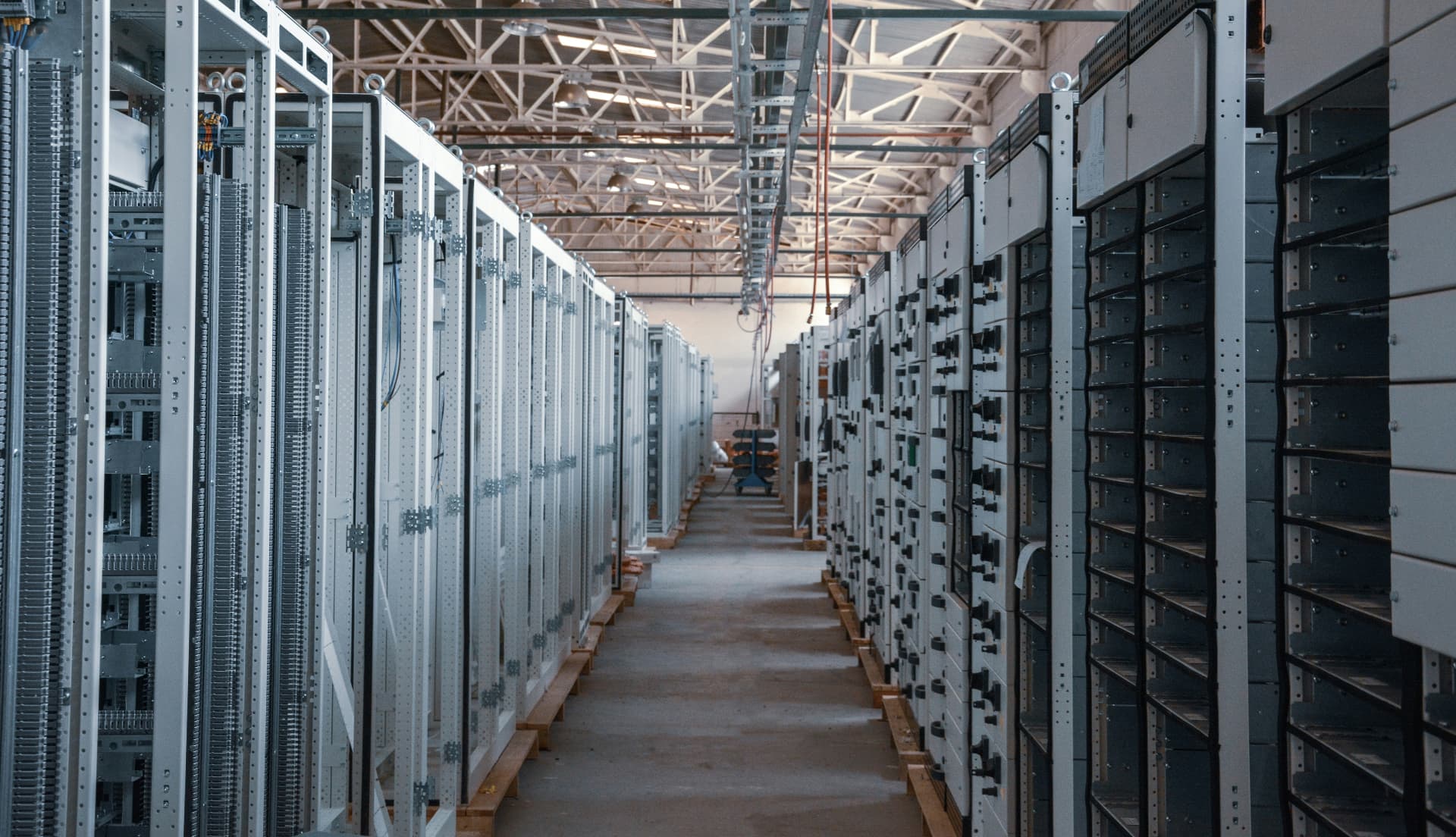
For most of the internet's history, the physical layer beneath it — the towers, data centres, storage arrays and mapping fleets — has been owned by a handful of large operators with the balance sheets to build at scale. Decentralized physical infrastructure networks, or DePIN, propose a different model: use token incentives to crowdsource that hardware from thousands of independent contributors, coordinate it on a blockchain, and let a global network perform the work a single incumbent once did alone. What began as a fringe experiment has, over the past two years, started to look like an asset class.
The numbers explain the attention. By late 2024 the DePIN sector carried a combined market capitalisation of roughly $5 billion; by September 2025 it had peaked above $19 billion, spread across more than 650 tracked projects and some 8.8 million devices operating in 199 countries. Messari, whose research first popularised the category, has gone further, projecting a market that could reach $3.5 trillion by 2028 — a figure we treat as a directional thesis rather than a forecast to bank on, but a telling one nonetheless.
What has changed the conversation is not price but revenue. Through the 2024–25 token drawdown, DePIN was, in the words of one analyst, “forced into fundamentals.” The projects that survived did so by selling something real. Aethir, a decentralised GPU network, reported close to $40 million in a single quarter of 2025, delivering 1.4 billion compute hours across more than 435,000 GPU containers — demand pulled almost entirely by the AI build-out and the global scramble for accelerated compute. Hivemapper, which pays drivers in tokens to map roads, grew its annualised revenue to roughly $18 million, a thirty-six-fold jump in under a year. Helium, the wireless network once written off as a cautionary tale, has quietly rebuilt: by early 2026 it counted more than 450,000 mobile subscribers and an annualised revenue run-rate near $18 million.
Helium is worth dwelling on, because it illustrates the inflection the sector is trying to reach. In 2025 AT&T began routing customer traffic onto Helium's community-built Wi-Fi hotspots for carrier offload — a mainstream operator paying a decentralised network for coverage it would once have built itself. That is the signal institutional investors have been waiting for: not crypto-native speculation, but an incumbent buying capacity because the economics work.
The underlying logic is straightforward, and it is what makes DePIN more than a passing narrative. Physical infrastructure is expensive to build and slow to scale, and much of the world's hardware — a spare GPU, an unused hard drive, a rooftop with line of sight — sits idle. DePIN turns that latent capacity into a coordinated supply network, using tokens to bootstrap participation before paying demand exists, then transitioning to genuine usage revenue as the network matures. Where it works, it collapses the capital cost of standing up an infrastructure network and distributes the upside to the people who supply it.
Where it fails, it fails for the same reason: the token that bootstraps supply can also disguise the absence of demand. This is the discipline the sector still lacks. Across those 650-plus projects, average annual revenue remains around $110,000, and the majority are still in what Messari calls the “token incentive” phase — paying contributors more than customers pay them. For an investor, the analysis is less about the theme, which is now well established, than about separating networks with durable external demand from those whose activity is an artefact of their own emissions. The questions we ask are unglamorous: who is the paying customer, would they stay if the token rewards stopped, and do unit economics improve as the network grows or merely inflate.
Three currents make this frontier hard to ignore. The first is artificial intelligence, whose appetite for compute and data has created a structural buyer for exactly the resources DePIN aggregates — decentralised GPU and storage networks are, in effect, a distributed answer to a supply shortage that centralised providers cannot fill alone. The second is the tokenisation of real-world assets more broadly, which is normalising the idea that physical value can be represented, financed and traded on-chain. The third is energy and connectivity in emerging markets, where the incumbent model never fully reached and a bottom-up network can leapfrog it — a dynamic of particular relevance across the Gulf, Africa and South Asia.
None of this makes DePIN a safe bet. Token volatility, regulatory ambiguity around what these instruments are, hardware reliability, and the perennial question of whether decentralisation adds value or merely cost are all live risks — and the gap between a $19 billion sector today and a multi-trillion-dollar forecast is a canyon most projects will not cross. But the shape of the opportunity is now legible in a way it was not eighteen months ago. The digital economy runs on physical infrastructure, ownership of that infrastructure is beginning to redistribute, and the returns will follow ownership. For allocators willing to underwrite the difference between real revenue and subsidised activity, that redistribution is the frontier worth mapping.
- — Messari, State of DePIN 2025.
- — DePINscan / BlockEden, DePIN Market Reality Check (March 2026).
- — Frontiers in Blockchain, “Decentralized physical infrastructure networks (DePIN) tokenomics” (2025).
- — Helium, “Helium Network Brings Wi-Fi Connectivity to AT&T” (2025).